


How to Manage a Self-Study Library Efficiently: A Complete Guide for Library Owners
A self-study library is more than just a room filled with tables, chairs and books. For students preparing for competitive examinations, government jobs, entrance tests and other academic goals, it can become an important part of their daily routine.
For library owners, however, managing a self-study centre comes with its own responsibilities. From handling student registrations to managing seats, collecting monthly fees and maintaining attendance, there are several activities that need regular attention.
As the number of students increases, managing everything manually can become difficult.
So, how can you manage your self-study library more efficiently?
Let's explore some practical ways.
1. Maintain Proper Student Records
Every library needs an organized system for managing student information.
When a new student joins, their basic details, contact information, membership plan and joining date should be recorded properly.
Maintaining these records helps library owners:
Identify registered members.
Check membership information.
Maintain student records.
Access important details when required.
Instead of depending entirely on notebooks, consider maintaining digital student records.
2. Organize Your Library Seats
Seat management is one of the most important parts of running a reading room.
Students often prefer fixed seats, while some libraries also offer flexible seating arrangements.
An organized seat management system helps you understand:
Which seats are occupied.
Which seats are available.
Which student has been assigned a particular seat.
How seating arrangements are being managed.
This makes it easier to handle new registrations and avoid unnecessary confusion.
3. Keep Fee Records Updated
Monthly membership fees are an important part of library operations.
Library owners should maintain proper records of payments, pending fees and membership plans.
A good fee management process helps you:
Track student payments.
Maintain payment history.
Review membership plans.
Keep expense records organized.
Regular updates can reduce the chances of missing important payment information.
4. Manage Attendance Regularly
Attendance records help library owners understand student visits and maintain organized membership information.
Depending on the library's requirements, attendance can be maintained daily or according to the operating schedule.
A digital attendance management feature can make record keeping more convenient.
5. Keep Track of Membership Renewals
Membership expiry and renewal dates should never be overlooked.
Create a process for checking membership validity and updating renewal information.
This is particularly important for libraries offering monthly, quarterly or other membership plans.
6. Consider Library Management Software
When a library grows, handling every activity manually can consume valuable time.
This is where library management software becomes useful.
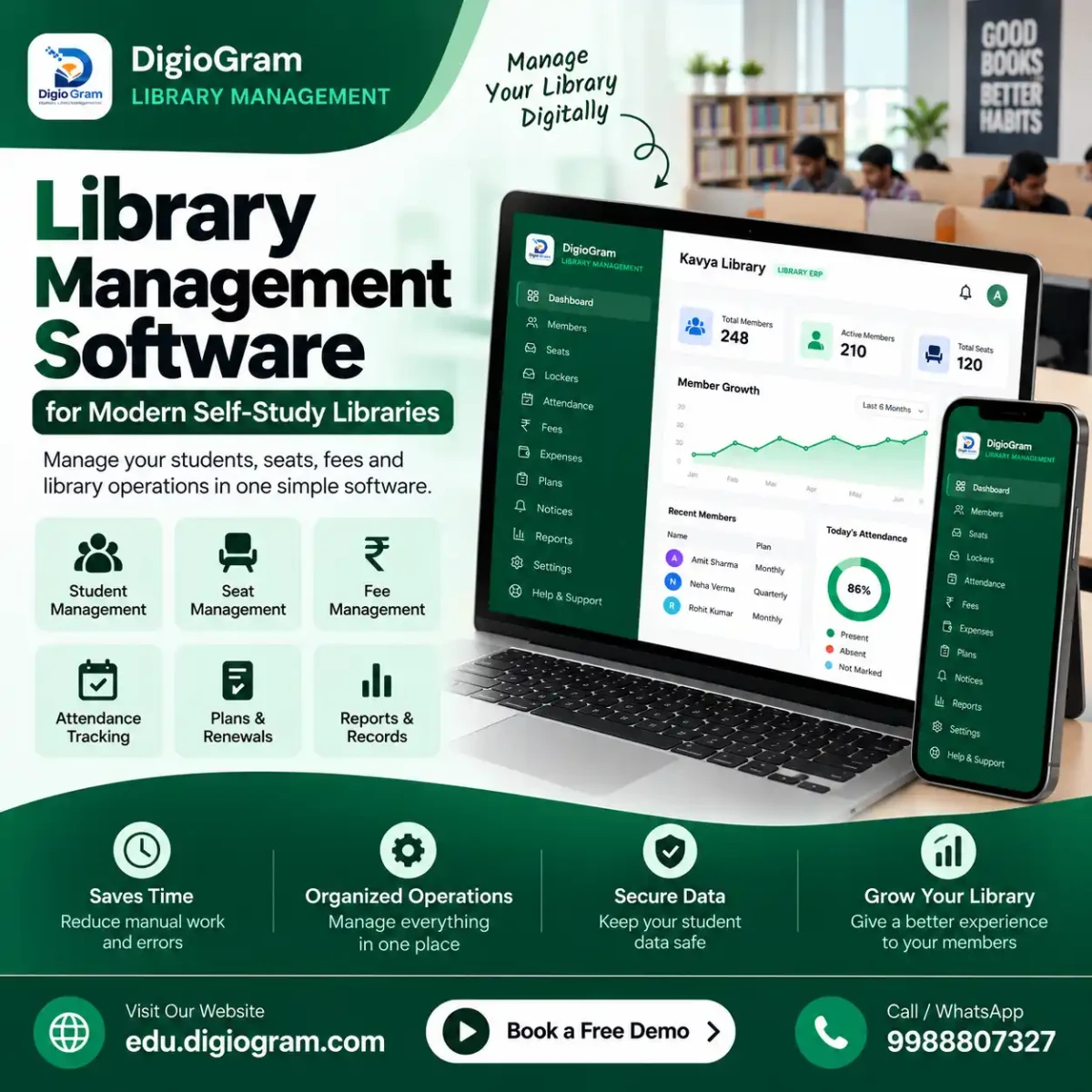
A library management system can bring important activities together, including:
Student and member management
Seat management
Locker management
Attendance tracking
Fee management
Expenses
Membership plans
Notices
Reports
DigioGram Library Management Software is designed to help self-study libraries and reading rooms manage these activities through a digital platform.
It provides a convenient way to organize important library operations in one place.
Also Read this: Best Library Management Software in India (2026)
7. Review Your Library Operations Regularly
Managing a library is an ongoing process.
Take some time every week to review student records, seat availability, payment information and membership details.
Regular reviews help identify issues before they become bigger problems.
Final Thoughts
Running a successful self-study library requires consistency, organization and attention to everyday details.
Whether you manage a small reading room or a larger study centre, a proper management process can make your work easier.
If you want to explore digital library management, take a look at DigioGram Library Management Software.
Visit https://edu.digiogram.com or contact 9988807327 to request a demo.


